Actually, racism is a huge problem and sensitive issue so the CEO of Starbucks, Howard Schultz decide a conversation about this. At various forums across the U.S, Starbucks employees started gathered and shared their personal stories related to race. In March 2015, Schultz called for baristas in his 20,000 US stores to write the words ” Race together ” on all customer cups. The purpose of doing this that hopefully their customers would ask about this problem and a conversation could start about racial inequality. As the result, the campaign has spread to more locations across the country until the masses on Twitter crushed this ‘crazy’ marketing.
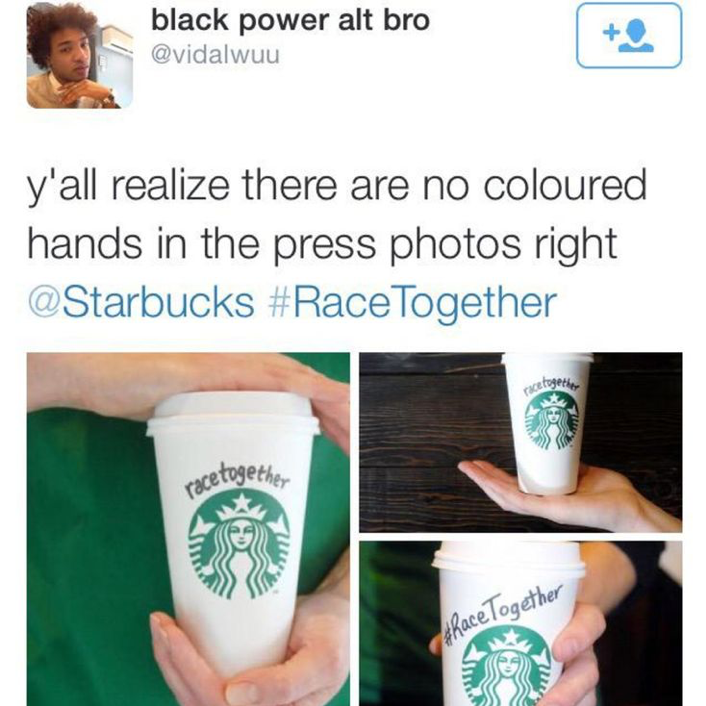
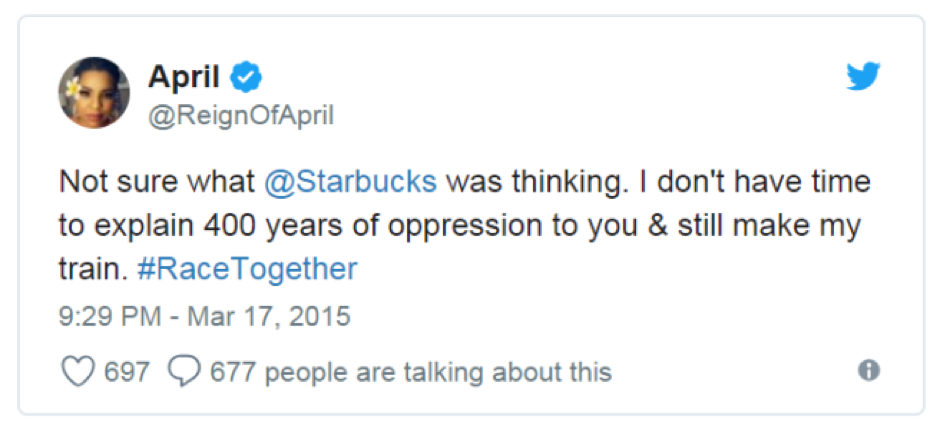
Unfortunately, a number of social media users attacked and fomented plenty of criticism on Twitter of the coffee giant, revealing their almost totally white board of directors and the fact that though of the promotional photos released showed the cups with words on them, none of the hands holding them were non-white. The Internet backlash led to a swift cancellation of the campaign and the VP of Communications for Starbucks, Corey duBrowa, had actually temporality delete his Twitter account due to the attack tweets that he was receiving. It’s bad enough that your company is already associated with basic white girls let’s not make that problem worse.
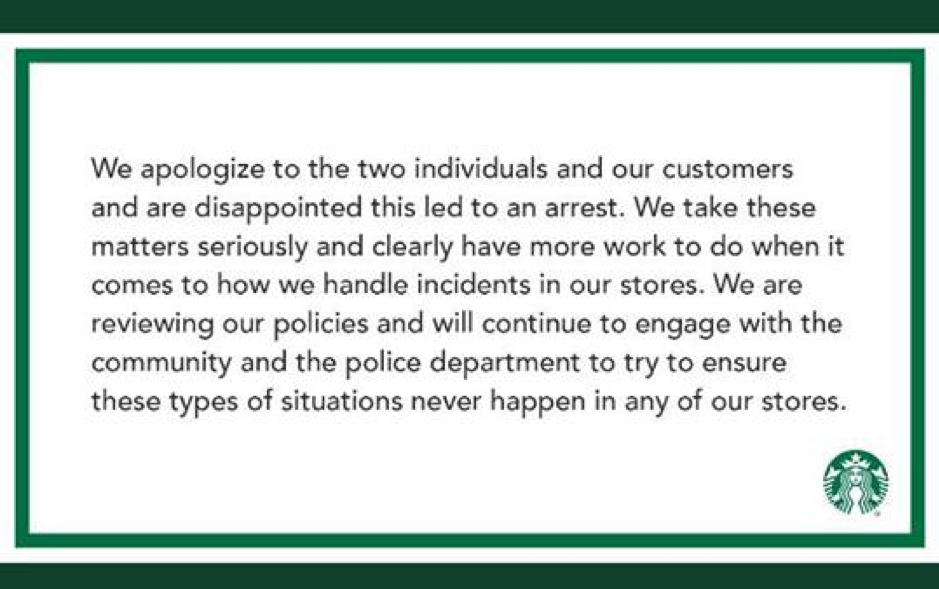
In conclusion, the marketing campaign ‘Race together’ is hijacked by trolling. This campaign might negatively relate to ethics in digital marketing because this mentioned about the some racially charged events that are not a good idea to stir up controversial topics. Arguably, the campaign has been criticised as opportunistic, inappropriate and also risked putting its brand at risk by taking on a subject that needs more than a talk over a $4 cup of coffee. Although Starbucks has apologised for what they did, some people still think their apologies is grossly insufficient.
‘Avenger: Infinity War’ blockbuster movie is definitely what all Marvel fans have been waiting for because all the Marvel Universe characters are going to come together in one epic battle against the ultimate enemy, Thanos. In fact, this movie has made news for its marketing campaign through multi-channel which created a lot of buzz for the movie. Arguably, this is exactly the good example of Integrated Marketing Campaign (IMC) concept which is an approach to achieving the objectives of a marketing campaign, through a well-coordinated use of different promotional methods that are intended to reinforce each other. So, in this blog, I will discuss different integrating channels that ‘Avengers: Infinity War’ has successfully used in their IMC strategy.
Integrative promotion at San Diego Comic-Con International:
San Diego Comic-Con International is an interactive forum in four days that permits Marvel fans to get closer to their loved comic artists, actors, directors and characters. This integrative promotion might help Avenger reach their target audience before the movie debut.
2. Integrating movie Teasers and Trailers:
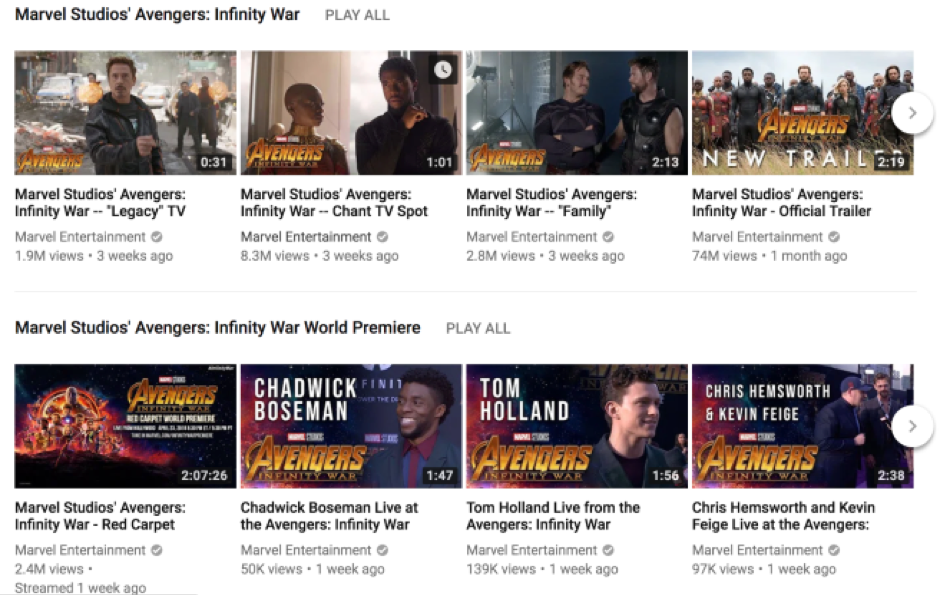
A preview or coming attraction is a commercial advertisement for a feature film that can poke the curiosity of the movie lover mind. ‘Avenger: Infinity War’ has worked extremely well for them. These trailers and teasers for this movie are very successful in sparking conversations on social networking sites like Facebook, Instagram and Twitter. It seems like this movie have effective viral marketing when many people share it on their social media pages so the ability watching movie trailer of their friends in SNS is really high.
3. Integrating social media:
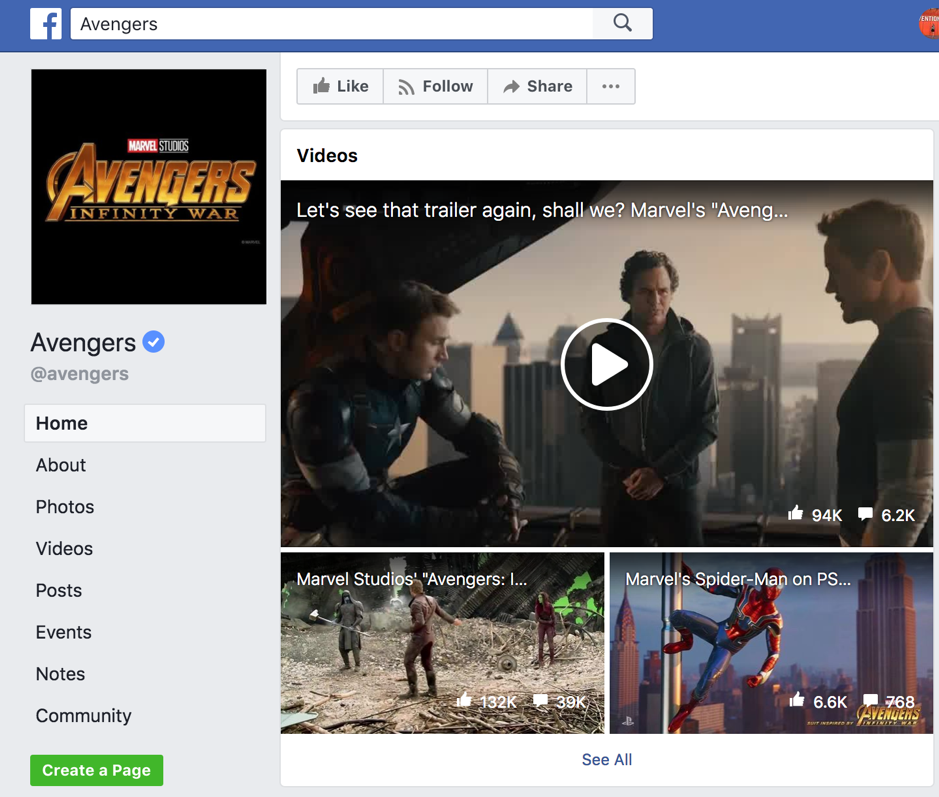
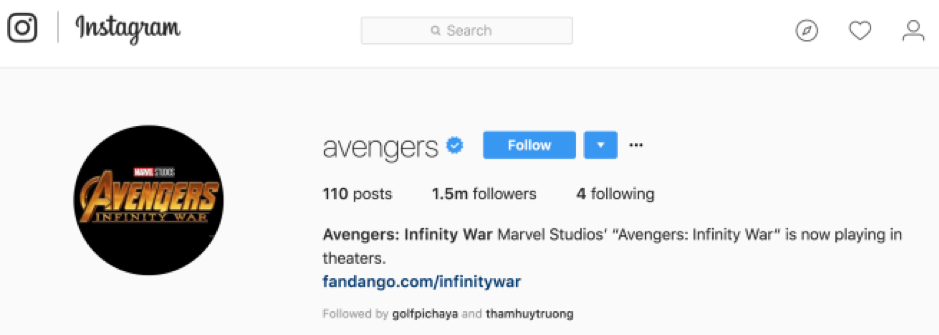
To coordinate and magnify the effect of marketing, there was an integrating SM with Marvel Integrated Marketing. ‘Avenger: Infinity War’ has official Facebook, Twitter, Instagram and Youtube account with a good number of subscribers. This allows Avengers speaking with their potential audiences and their audiences can also speak with others through a ‘Sharing’ click or hashtag #InfinityWar on all SM. This kind of fan interaction on all social accounts helps in building an empire Marvel year to be.
Instagram Avenger with 1.5 million followersOfficial Youtube Channel of Marvel with 7,488,168 subscribers
4. Integrative promotion through Partnership:
With partners such as Coca-Cola or Quicken Loans ‘Avengers: Infinity War’ is receiving the biggest promo push ever for a Marvel title, with a media value estimated north of $150M. Other brands teaming with Infinity War include Ziploc, Go-Gurt, Yoplait, Synchrony Bank, American Airlines and Stand Up to Cancer. In addition Duracell, Unilever, Quaker, Chevron and Samsung will be running promotions for Infinity War in smaller markets.
American Airline
To sum up, this movie is one that has been the result of 10 years of work and the Marvel Universe has garnered a gigantic fan base all across the globe, so the global promotion is very important. With different marketing channel, this movie consistently reflected the same message that is to promote the movie Avenger to audiences before the film debut. As the result, the box office numbers also seem to show that their campaigns are working well as ‘Avenger: Infinity War’ has break report with the highest grossing movie franchise ever.
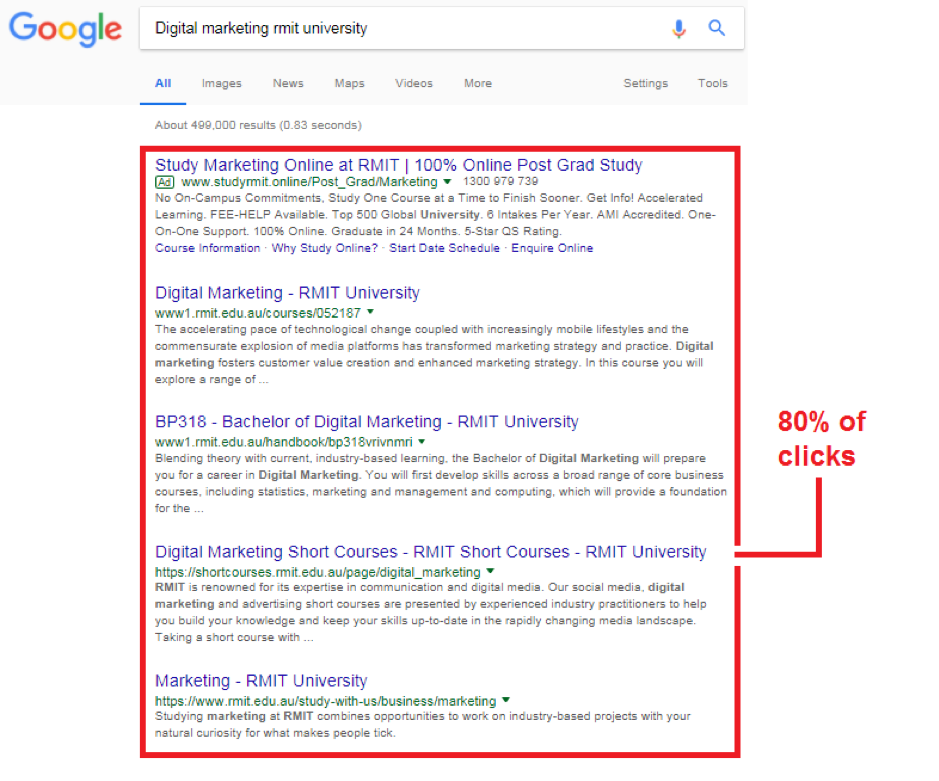
Assuming you own a business in future and have an official website but the number of visitors to this website is not what you expect. The question is how can your customer find you on Google? In fact, 90% of researchers will not click on the second page and nearly 80% clicks of the top 5 results on Google search engine. If your business does not appear in top 5 and page 1 research as well, you might slowly lose the opportunities of promoting your products and services to potential customers as well as revenue compared to competitors. So this blog will help your company changing this situation through 5 ways SEO (Search Engine Optimisation) improving the rank on Google.
A. What is SEO?
Search
Engine Optimization was defined as a structured approach used to increase the
position of a company or its products in search engine natural or organic
results listings for selected keywords or phrases” (Chaffey and Ellis 2012).
Moreover, a website with good SEO when it always appears in the high ranking
and when researchers can easily to find the content that they need.
B. 5 ways SEO to improve ranking on Google engine:
SEO domain name: Keywords contained in the domain could make SEO more favorable. Moreover, you can also create sub-domains to capture specialized keywords. A domain name is an alias to point people to that specific spot on the internet where you’ve built your website. For example, with RMIT University website, the domain name is rmit.edu.au and sub-domains is www. Assuming that your company is a real estate business in Melbourne and your company name is ABC. With the domain name is realestatemelbourne.com (or .au) will be better than a domain with your business name (like ABC.com). Who knows what the hell ABC is to search exactly your business name, right?
2. Using SEO photos and videos on your website: In the article should have an attached picture or video to create SEO advantage. Especially, the file name of pictures or videos should be keywords and business should create Title tags to describe the image and insert the appropriate keyword that customer expects to find. Moreover, you should use images with small size (less than 10kB) to increase display and loading speed of your
3. SEO useful and relevant content:
The content of the website could make your customers feel that your posts are really useful, helping them to solve problems or even they can directly interact by commenting. Short content is almost impossible to get high rankings on search engines. Hence your best article should reach a minimum of 700 words. With longer content does give your business opportunities to provide more value, include more keywords, incorporate more outbound links, and of course, get people to spend more time reading.
4. Social networking sites sharing:
The number of Facebook shares, Tweeter, Pinterest, Instagram and other social media mentions can influence SEO rank. Installing social sharing buttons on your website not only makes it easy for users to share your content, and thereby improve user experience, it can also help you rank higher on Google.
5. SEO analysis of competitors:
Finally, researching your competitors is a very important part of SEO, to know what strategies did they use and how to do SEO of the TOP rivals in Google. In particular, you can see how they write their titles, description tags, keywords that link to content, how they optimize their on-page SEO (content and HTML source code). Based on that, you can refer adjusting your website to get high rankings like them.
In
conclusion, 5 ways I mentioned above are quite basic as what I understand
about this topic but I hope it’ll be useful for business to rank the top on
Google through SEO. If you are interested in this topic, check out the Youtube
video below. It’s quite long but extremely awesome and I’m sure you can easily
take away a lot of valuable tips to get Top ranking on Google.
Reference list:
Chaffey, D & Ellis, F 2012, Digital Marketing: Strategy, Implementation and Practice, 5th edn, Pearson.
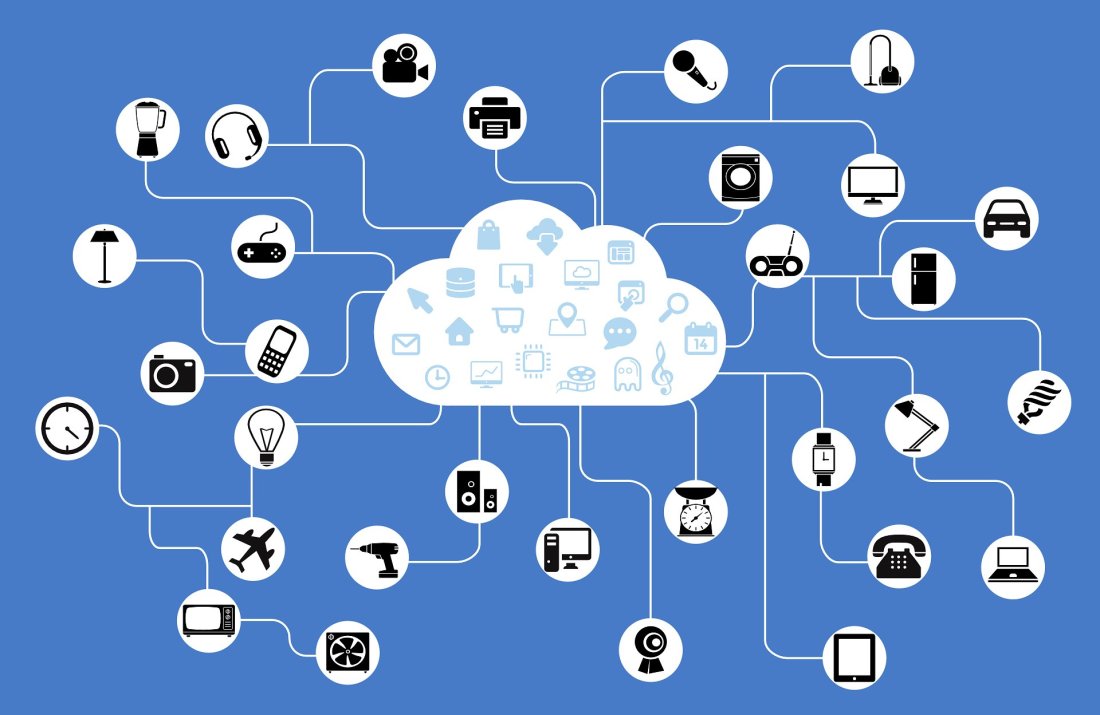
Gradually, almost no one realised that, IoT devices became an indispensable part of our daily routine, bringing unprecedented convenience and making our lives easier and more interesting. In order to target not only adults, but also children and pets, IoT devices come in all shapes and sizes, ranging from smart TVs, thermostats, locks and security cameras to children’s toys, baby monitors and pet trackers. The way things are happening, as well as almost every device in our home, is equipped with sensors and internet connectivity.
However, all that
convenience comes with a big drawback. IoT devices are famous for lack of
security, mainly because manufacturers tend to ignore that aspect in a hurry to
bring their products to market as soon as possible. Because the implementation
of powerful security features is costly and time-consuming, manufacturers will
choose not to use it, making them vulnerable to outside attacks.
The number of IoT devices has increased exponentially in recent years and this trend shows no signs of slowing down. In fact, Cisco hardware company has predicted that there will be 28.5 billion devices connected in the world by 2022 (Gagliordi, 2018). Even today, it would be very difficult to find a household that doesn’t have at least one connected device. As the number of IoT devices increases, so do the number of network attacks on them. According to network security company Kaspersky Lab, there have been three attacks on devices connected to devices connected in the first half of 2018 compared to the whole of 2017. Previously, in the period from 2016 to 2017 The number of attacks has increased 10-fold, suggesting that worrying uptrend will become more pronounced in the coming years as IoT devices become more popular (Kaspersky, 2018).
There are a number of ways manufacturers can leave IoT devices vulnerable to hackers, but the most common involves assigning weak default login credentials. Even worse, such information is often unchangeable and even if possible, users are rarely prompted to do so. This allows hackers to easily get them, sometimes nothing but web search and compromised device control. The infamous Mirai botnet attack of 2016 still serves as the best example of how to unsecured IoT can devices. It was the most disruptive distributed denial-of-service (DDoS) attack in history, in which hackers gained the right to control over 100,000 poorly secured IoT devices and use them to conduct a sustainable attack. go to the leading DNS provider Dyn, knock out many important sites in the process, such as Twitter, Netflix, Amazon and CNN (Woolf, 2016).
However, IoT
devices are not used only to launch DDoS attacks. Hackers are also increasingly
using them to attack consumers directly and steal their personal data or use
their systems to exploit electronic money. Princeton University recently
conducted a comprehensive study of more than 50 consumer IoT devices, including
smart TVs, security cameras, smart bulbs, sleep monitors, smart blood pressure
monitors and children toy. The study revealed that many tested devices do not
even have basic encryption and authentication features, allowing an attacker to
deduce user behavior from encrypted or contacted metadata. with third parties
that users do not know.
After the information above, do you think IoT devices can bring their own risks related to legal issues and privacy for users?
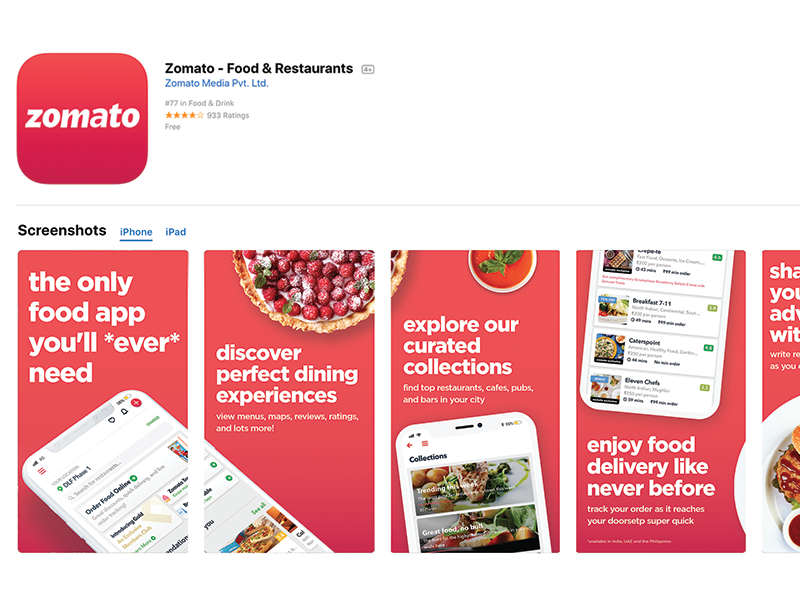
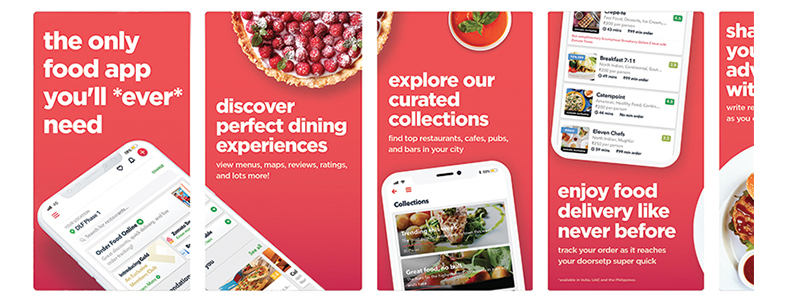
Zomato, the worldwide restaurant search and explore service has introduced context based advertisements on mobile app, a move from its prior model where advertisements seemed just on the website.
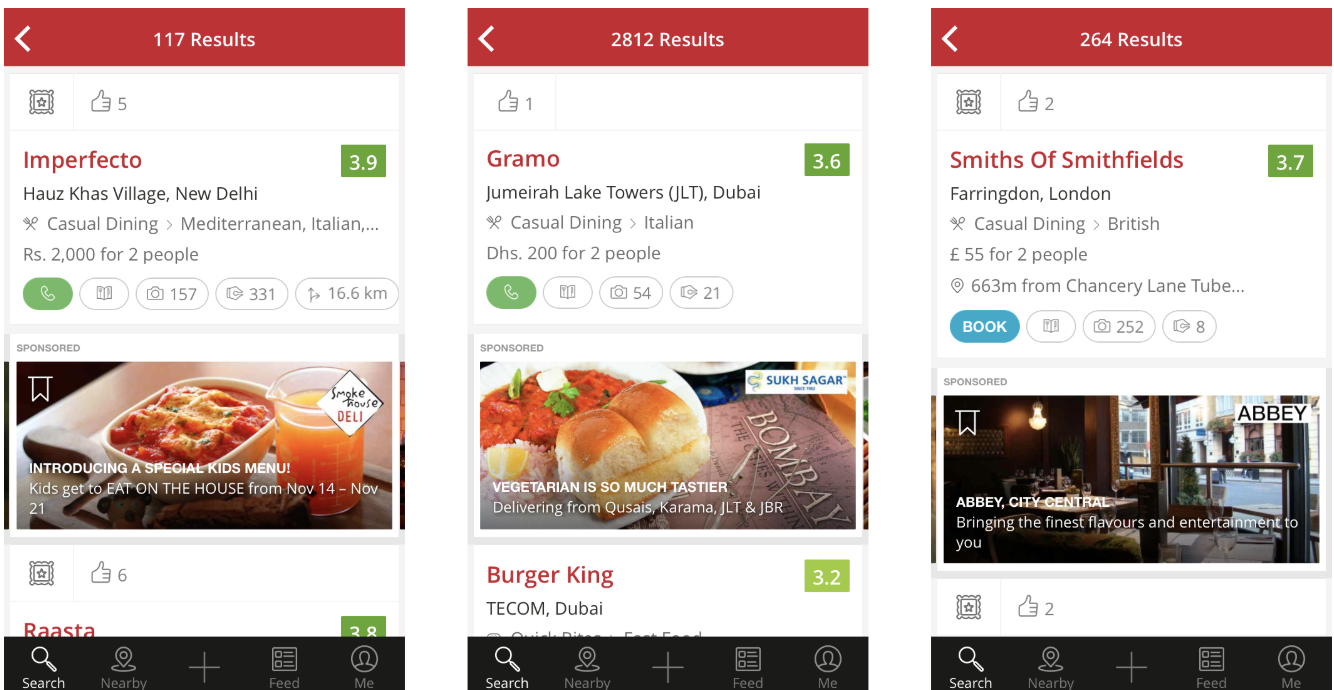
Utilising location-based information (GPS), the application will appear in-line ads focused at users in a certain geographical area. The advertisers will keep on being eateries and different restaurants which are most relevant to a Zomato user.
In staying aware of the surge in mobile utilisation of e-commerce applications rather than the internet browsers, 50% of Zomato’s 30 million or more month to month visits originate from its versatile applications over the globe (Srinivasan, 2018)
Zomato’s income
model will presently be founded on hyper-local advertising contextual to the user
seek criteria. This enables restaurants to target customers officially looking
for dining options in their catchment zone.
At present, more than 4500 restaurant businesses in 15 nations comprehensively advertise on Zomato, with the quantity of merchants expanding constantly.
Zomato’s Mobile Strategy
Zomato’s mobile
focus is additionally joined by the recently launched Zomato for Business
application – an application manufactured solely to help entrepreneurs connect
with customers and drive business.
“We experimented a bit over the recent months, and we trust we have the correct product in place now. This increases the reach of our advertisements by 100%,” said Zomato Co-Founder and COO, Pankaj Chaddah (Lets Intern, 2014)
A paradigm shift in advertising
With consumers becoming more aware and more difficult to please, advertisers have to go the extra mile to be heard and have to make sure their ads strike a cord and provide valuable information to their consumers.
Setting based promotions are powerful as they give valuable data without being meddling like conventional promotions and advantages the two purchasers and sponsors. Setting based promotions are most appropriate for mobiles and wearable gadgets as they are compact and have in-assembled GPS get to, which assumes an imperative job in keeping them compelling.
Funding and rebranding
Zomato had
recently raised 60 million drove together by Info Edge (India) Limited and Vy
Capital, with interest from Sequoia Capital. They had before raised USD 53
million from Info Edge (India) Limited and Sequoia Capital over various rounds
of financing. This takes Zomato’s total funding to over USD 113 million and a
post cash valuation of $660 million.
The organisation likewise rebranded their logo as they needed an image that could transcend languages, cultures, and geographical boundaries and be instantly recognisable to anyone who sees it. Not surprisingly they got support and analysis for their turn, but the founders felt it was a truly necessary move to take Zomato worldwide.
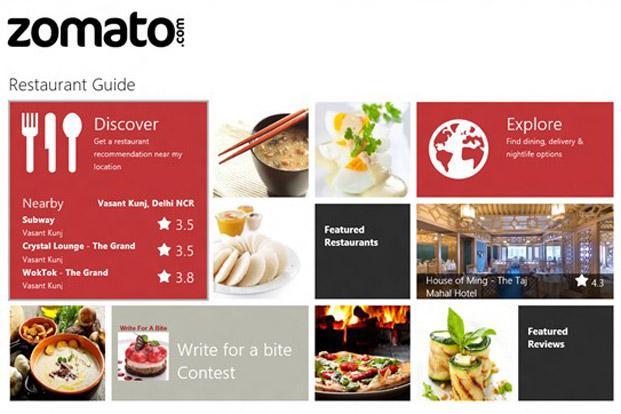
Now it’s a great opportunity to increase its adaptation endeavours after the India-headquartered organisation presented publicising inside its iOS, Android, Windows Phone and Blackberry applications. The organisation also told TechCrunch it will start a mobile payment trial next month.
Zomato, which covers increasingly 100 urban areas around the world, as of now offers ads on its site, yet it says mobile accounts for more than half of the 30 million monthly visits it sees over all platforms — that makes this move extremely critical (Russell, 2015). Remembering that publicising is especially precarious on little screens, Zomato says its ads spots are designed to add context instead of hinder the user experience.
Ads only appear for search— labelled ‘sponsored’ inside the search results page, to be exact — and are served dependent on a user’s area and the the type of restaurant that is being searched for. Zomato trusts that this mix will enable advertisements to be powerful for eateries and valuable for users.
Expansion Plans
Zomato is operating in 18 countries and intending to grow to 14 more crosswise over Europe, Southeast Asia, Australia, and the Americas with Ireland being their first target. With the launch of its section for Ireland, Zomato now covers more than 3,000 restaurants in Dublin, and is available on web and mobile applications.
How do you think about the advertisement way of Zomato? Plzzz give me some feedback about your opinions.
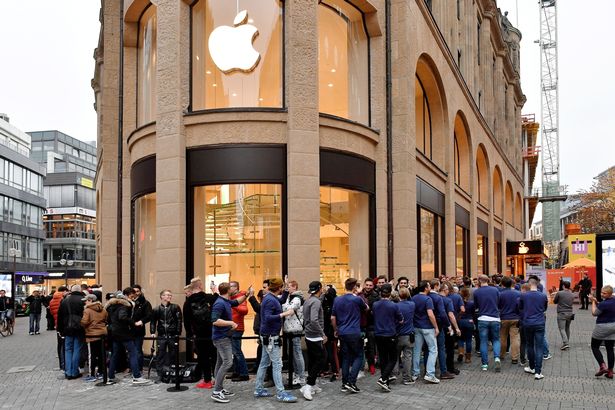
The reason I mentioned this is because I recalled the conversation last September last year with a friend who just landed at Changi Singapore airport to line up with more than 200 other people, waiting to be bought crazy New iPhone phone. For me, it was a silly concept that why fly from Vietnam to Singapore just to become one of the first to receive the phone. But based on theory of marketing, the Apple frenzy is something to admire.
They have an army of loyal fans that would promote Apple until the cows come home. They buy absolutely everything that they produce, no matter what the cost. In fact, they have made the news once again for topping a poll as the coolest brand in Britain!(1) And I’m struggling to think of another brand that has managed to achieve the same adoration and fan base that this brand has… So how do they do it?
#1. They know
good social currency
The company
utilises social currency through providing a community of shareable information
through its social media such as Facebook, where users can see Apple’s post and
pass along knowledge.
#2. They know
good triggers
Apple is good at keeping a consistent brand, even though they are always growing, but the changes they make do not break the interface of their overall brand message. This consistency runs on all channels they have. Customers can know it is an Apple ad even before the brand appears on any media channel. This helps Apple maintain relevance with customers. (2)
#3. They create
good emotion
Customer creates emotion through demonstrating that customer feels better when having Apple products. That is conveyed through the story they convey throughout the following marketing process. (3)
#4. They build a
good story
The story they
conveyed during their marketing is a strong story. It shows lifestyle,
innovation, passion and style – and why don’t you want to be part of it? It is
like an exclusive club with millions of members.
#5. Good
practical value.
So when you buy
an Apple product, you’re sharing and representing the same ideals that this
brand represents. And that is not the only thing that can be pointed out for
this. You can see it in the powerful copy they use on their website, stylish
images in their advertising and beautifully designed of their products. That’s
all about telling a strong story that will make your audience want to be part
of every try you make.
#6. Public
Apple regularly
posts contact with users and acknowledges their support. By publicity, it
encourages users to continue giving feedback, in the hope that they can gain
objective feedback on their products from customers.
With these 6
STEPPS, we can see that Apple is using word-of-mouth to increase its relevance
in our society today. From there, we can see that Apple always wants to contribute
to being a part of the community whether or not we use Apple products.
So what do you
think? Does the brand succeed in using the word-of-mouth method and
communicating with a large number of customers? Let me know in the comments.












 Digital Marketing