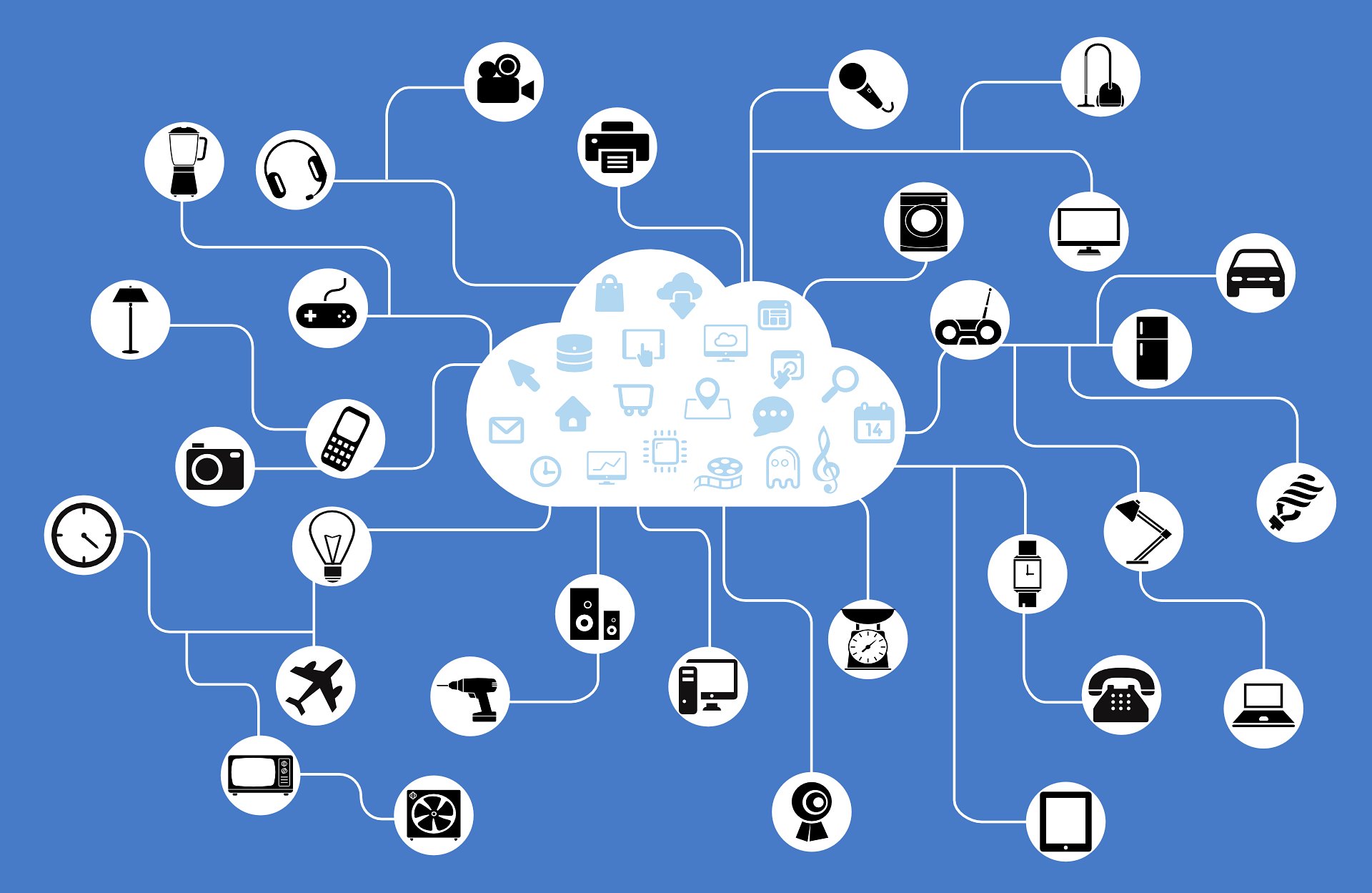
Gradually, almost no one realised that, IoT devices became an indispensable part of our daily routine, bringing unprecedented convenience and making our lives easier and more interesting. In order to target not only adults, but also children and pets, IoT devices come in all shapes and sizes, ranging from smart TVs, thermostats, locks and security cameras to children’s toys, baby monitors and pet trackers. The way things are happening, as well as almost every device in our home, is equipped with sensors and internet connectivity.

However, all that convenience comes with a big drawback. IoT devices are famous for lack of security, mainly because manufacturers tend to ignore that aspect in a hurry to bring their products to market as soon as possible. Because the implementation of powerful security features is costly and time-consuming, manufacturers will choose not to use it, making them vulnerable to outside attacks.
The number of IoT devices has increased exponentially in recent years and this trend shows no signs of slowing down. In fact, Cisco hardware company has predicted that there will be 28.5 billion devices connected in the world by 2022 (Gagliordi, 2018). Even today, it would be very difficult to find a household that doesn’t have at least one connected device. As the number of IoT devices increases, so do the number of network attacks on them. According to network security company Kaspersky Lab, there have been three attacks on devices connected to devices connected in the first half of 2018 compared to the whole of 2017. Previously, in the period from 2016 to 2017 The number of attacks has increased 10-fold, suggesting that worrying uptrend will become more pronounced in the coming years as IoT devices become more popular (Kaspersky, 2018).
There are a number of ways manufacturers can leave IoT devices vulnerable to hackers, but the most common involves assigning weak default login credentials. Even worse, such information is often unchangeable and even if possible, users are rarely prompted to do so. This allows hackers to easily get them, sometimes nothing but web search and compromised device control. The infamous Mirai botnet attack of 2016 still serves as the best example of how to unsecured IoT can devices. It was the most disruptive distributed denial-of-service (DDoS) attack in history, in which hackers gained the right to control over 100,000 poorly secured IoT devices and use them to conduct a sustainable attack. go to the leading DNS provider Dyn, knock out many important sites in the process, such as Twitter, Netflix, Amazon and CNN (Woolf, 2016).

However, IoT devices are not used only to launch DDoS attacks. Hackers are also increasingly using them to attack consumers directly and steal their personal data or use their systems to exploit electronic money. Princeton University recently conducted a comprehensive study of more than 50 consumer IoT devices, including smart TVs, security cameras, smart bulbs, sleep monitors, smart blood pressure monitors and children toy. The study revealed that many tested devices do not even have basic encryption and authentication features, allowing an attacker to deduce user behavior from encrypted or contacted metadata. with third parties that users do not know.
After the information above, do you think IoT devices can bring their own risks related to legal issues and privacy for users?
References:
- Cohen, N 2019, ‘A team’s tool can inspect the secret life of your smart home items’, Tech Xplore, 16th April 2019, viewed 5th May 2019, <https://techxplore.com/news/2019-04-team-tool-secret-life-smart.html>.
- Gagliordi, N 2018, ‘IoT to drive growth in connected devices through 2022: Cisco’, ZDNet, 27th November 2018, viewed 5th May 2019, <https://www.zdnet.com/article/iot-to-drive-growth-in-connected-devices-through-2022-cisco/>.
- Kaspersky, 2018, ‘New IoT-malware grew three-fold in H1 2018’, Kaspersky, 18th September 2018, viewed 5th May 2019, <https://www.kaspersky.com/about/press-releases/2018_new-iot-malware-grew-three-fold-in-h1-2018>.
- Woolf, N 2016, ‘DDoS attack that disrupted internet was largest of its kind in history, experts say’, The Guardian, 27th October 2016, viewed 5th May 2019, <https://www.theguardian.com/technology/2016/oct/26/ddos-attack-dyn-mirai-botnet>.


